

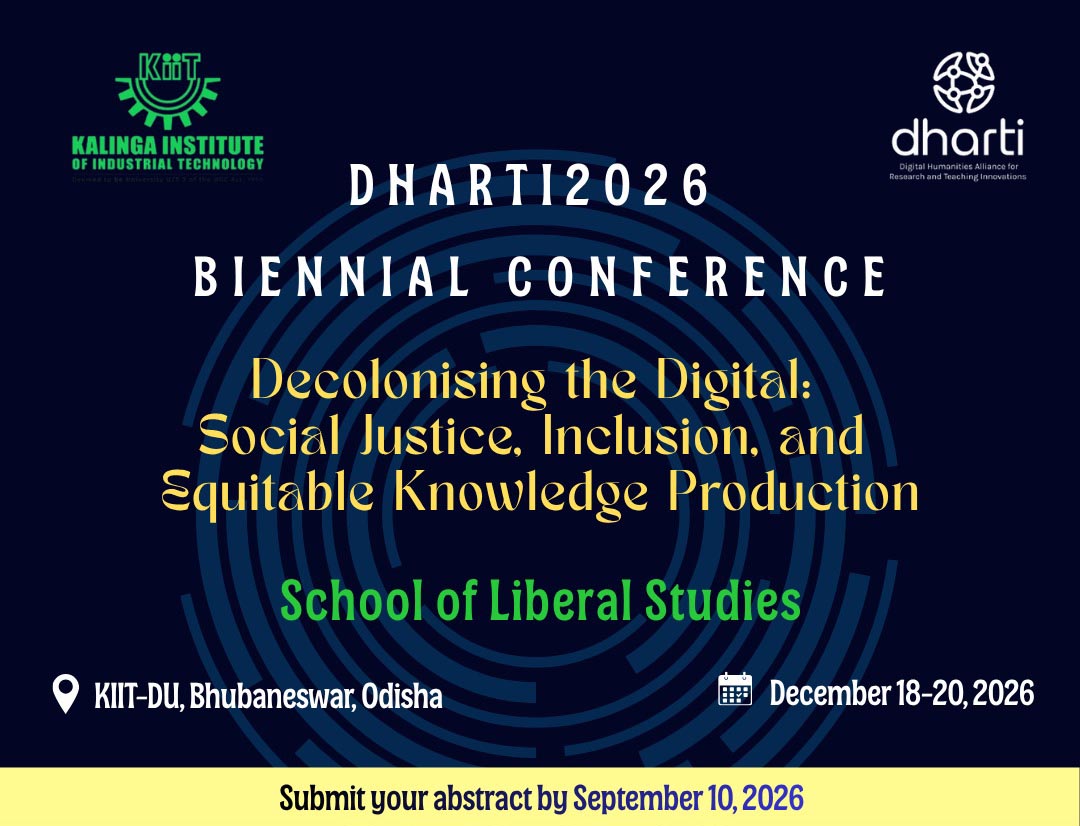
The School of Liberal Studies, KIIT Deemed to be University, is proud to host DHARTI 2026, the biennial conference of the Digital Humanities Alliance for Research and Teaching Innovations (DHARTI), from 18 to 20 December 2026, in collaboration with DHARTI. The conference will examine the intersections of digital humanities, social justice, and inclusive knowledge production. It will engage with emerging debates on the role of digital technologies in research, education, and cultural practice, with particular attention to the social and intellectual implications of digital transformation.
The Digital Humanities Alliance for Research and Teaching Innovations (DHARTI) is an Indian academic collective dedicated to advancing digital humanities scholarship and facilitating digital practices in the arts and humanities, both within and beyond academic institutions. Its work includes supporting digital humanities projects, developing research networks, and creating opportunities for scholars to present, discuss, and extend their research. As a constituent organisation of the Alliance of Digital Humanities Organizations (ADHO), DHARTI also connects digital humanities scholarship in India with international academic networks.
The 2026 conference, themed “Decolonising the Digital: Social Justice, Inclusion, and Equitable Knowledge Production”, will critically examine the relationship between digital technologies, power, and knowledge. It will explore how digital environments shape the representation of histories, languages, and intellectual traditions, while addressing questions of epistemic inequality, cultural diversity, and equitable access to knowledge. Featuring keynote addresses by distinguished scholars, plenary sessions, research presentations, and specialised workshops, the conference will offer opportunities for meaningful academic exchange among researchers, educators, and practitioners from India and abroad. Discussions will span decolonial approaches to digital scholarship, artificial intelligence, digital pedagogy, and the challenges of developing more inclusive and equitable practices of knowledge production.
