From a modest beginning to a global university.
KIIT was established in 1992 as a vocational training centre with only two staff and 12 students. It took shape as an institution of higher learning in 1997, when the degree engineering programme commenced.
The journey of KIIT is the story of vision, perseverance, teaching excellence, innovation, sports, internationalisation and service to society.
Built with limited means, but an unlimited vision.
KIIT owes its existence to the vision of its Founder, Prof. Achyuta Samanta, who created the institution for the benefit of society with no land, limited finances and very modest resources.
From these small beginnings, KIIT has developed into a leading university with a strong interdisciplinary culture and a commitment to teaching excellence.
The year 1992 marks KIIT’s establishment as an ITI, while 1997 marks its opening as a centre of higher learning with the commencement of the degree engineering programme.
Timeline of KIIT’s growth and recognition.
Search by year, ranking, school, accreditation, event or recognition.
Foundation and Early Growth
From registration and vocational training to higher education and university status.
KIIT Society registered
KIIT Society was registered in June 1992.
KIIT-ITI was set up, and KISS, the human face of KIIT, started its journey.
KIIT Polytechnic founded
KIIT Polytechnic was founded, strengthening KIIT’s foundation in technical education.
Degree engineering programme started
The degree engineering programme commenced. This year is considered the base year of KIIT as a centre for higher learning.
Declared Deemed University
KIIT was declared a Deemed University by the Ministry of HRD, Government of India.
Beginning of five constituent schools
Kalinga Institute of Medical Sciences, Kalinga Institute of Dental Sciences, School of Rural Management, School of Biotechnology and School of Law were added.
Expansion into offbeat schools
KIIT expanded into newer academic domains with the School of Fashion Technology, School of Film & Television Production and KIIT Media School.
Accreditation, National Recognition and Placement Growth
KIIT’s academic quality and professional outcomes gained stronger national visibility.
Category ‘A’ status and Tier 1 accreditation
KIIT was conferred Category ‘A’ status by the Ministry of HRD, Government of India.
KIIT also achieved Tier 1 Accreditation under the Washington Accord by the National Board of Accreditation.
Strong placement performance
114 companies visited KIIT, generating 4777+ job offers, with the highest package recorded at Rs. 33 lakhs.
NIRF ranking and IET accreditation
KIIT was ranked 49 by NIRF, Ministry of Human Resource Development.
KIIT was accredited by the Institution of Engineering and Technology, UK.
THE World University Rankings recognition
KIIT was ranked as the first self-financing university in Eastern India by the Times Higher Education World University Rankings.
Young University Rankings and ISAS Badge
KIIT was ranked 301+ in the Times Higher Education Young University Rankings.
KIIT became the first Indian university to get the ISAS Badge from the International Association of Universities.
NIRF and ARIIA recognition
KIIT was ranked 24th among Indian universities by NIRF 2020, Government of India.
KIIT was ranked 1st in ARIIA Ranking 2020.
Global Ranking, International Accreditation and Impact
KIIT strengthened its global profile, impact rankings and international accreditation footprint.
QS Stars, THE Awards Asia and global recognition
KIIT was rated as a 5 Star institution by the QS Stars Rating System.
KIIT was acknowledged as the Leadership and Management Team of the Year in THE Awards Asia 2021.
KIIT was ranked 801–1000 by THE World University Rankings 2022, 201–300 by THE Impact Rankings 2021 and 251–300 in the Emerging Economies University Rankings by THE.
KIIT was ranked 21st among all government and private universities in India by NIRF, Government of India.
ABET affiliation, SDG recognition and NIRF 20
KIIT’s Engineering programmes received ABET, USA affiliation.
KIIT was ranked 20th among all government and private universities in India by NIRF, Government of India.
KIIT was ranked among 601–800 in THE World University Ranking 2023 and ranked 8th globally in THE Impact Rankings 2022 for reducing inequalities under SDG 10.
KIIT was placed in the rank band of 201–250 among Asian universities by THE Asia’s best universities.
NIRF 16, NBA Tier 1 and THE ranking band
KIIT was ranked 16th among all government and private universities in India by NIRF, Government of India.
B.Tech programmes were once again granted the highest accreditation, Tier 1 status by the National Board of Accreditation, for a period of six years.
KIIT was ranked among 601–800 in the Times Higher Education World University Ranking 2024.
KIIT was placed in the rank band of 151–200 among young universities by Times Higher Education Young University Rankings.
Updated Milestones and Global Visibility
Recent achievements that complete KIIT’s History page up to the present period.
THE Young University Rankings
KIIT was ranked 168th worldwide in the Times Higher Education Young University Rankings 2024.
NIRF 17 and THE Impact Rankings
KIIT was ranked 17th among Indian universities by NIRF 2025.
KIIT was placed in the 101–200 cohort globally in the Times Higher Education Impact Rankings 2025.
KIIT was ranked 184th in Asia in THE Asia University Rankings 2025 and stood as the 8th best university in India among government and private institutions.
THE World University Ranking 2026
KIIT retained its position in the 501–600 cohort in the Times Higher Education World University Ranking 2026.
Its Computer Science Engineering ranks in the cohort of 301–400 and its overall Engineering ranking is 401–500 in the world.
THE Asia University Rankings 2026
KIIT reached 169th in Asia, 6th nationally and No. 1 in Eastern India in the Times Higher Education Asia University Rankings 2026.
QS World University Rankings: Asia 2026
KIIT was placed at rank 294 in QS World University Rankings: Asia 2026.
The journey continues through measurable recognition.
KIIT’s history is not only about growth in infrastructure, but also about national and international recognition in academics, sustainability, innovation, sports and global engagement.
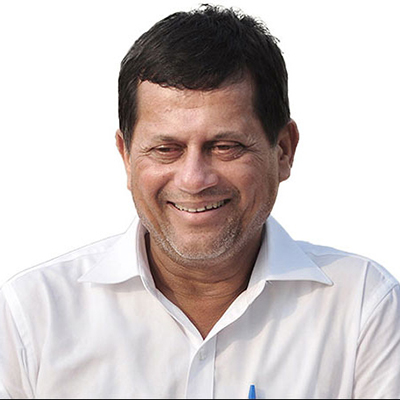
Prof. Achyuta Samanta
Founder, KIIT & KISS
The history of KIIT is deeply connected with the vision and perseverance of Prof. Achyuta Samanta, who started the institution with limited resources but a strong commitment to education and society.
From an initial investment of Rs. 5000, two rented rooms, 12 students and two staff members, KIIT has grown into a globally recognised university with a strong academic, research, humanitarian and sports identity.
Know More About FounderContinue the KIIT journey through related pages.
These links help visitors move naturally from history to recognition, academics, global footprint, campus life and the larger KIIT ecosystem.
A living history of growth and service.
KIIT’s journey from 1992 to the present continues through academic excellence, innovation, global engagement, sports, research and social responsibility.